Support Greening Program with Tenurial Rights, Clone Seedlings
The adoption of a National Greening Program supported by 25 million upland dwellers with individual tenurial rights to the land they are developing, using clone seedlings which double the yield of today’s tree farms, can provide “a very positive outlook on the future of Philippine forestry,” helping alleviate poverty, mitigate climate change, and create new markets for the wood industry.
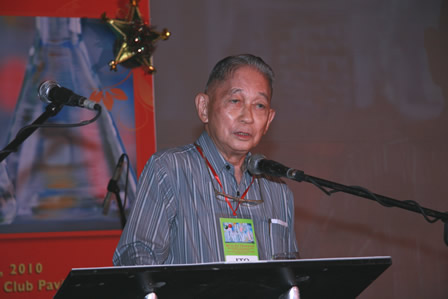
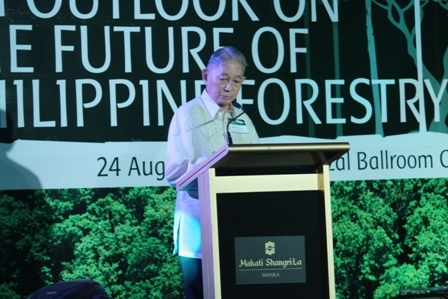
This was the strong suggestion of Resins Inc. President Meneleo J. Carlos, Jr. in his special message before the Philippine Wood Producers Association on its 60th Annual General Assembly held last August 24 at the Makati Shangri-la Hotel. The assembly included a half-day forum with the theme “An Outlook on the Future of Philippine Forestry.”
Mr. Carlos noted that the National Greening Program launched through Executive Order 26, which aims to plant 1.5 billion trees within six years, and the Sustainable Forest Management Act, currently being deliberated in Congress, are “of such magnitude and scope that they spell the future of Philippine forestry – the Future of the Wood Industry, the Future of Wooden Buildings and Homes, and the Future of Philippine Wood Exports.”
Among the speakers were Socio-Economic Planning Secretary Arsenio M. Balisacan, Archbishop Orlando B. Quevedo, Makati Business Club Chairman Ramon R. del Rosario Jr. and Asian Institute of Management Professor Mario Antonio G. Lopez
He said that while seven million hectares of the country’s forestlands are being reserved to sustain biodiversity and ecology, the other seven million hectares are needed to provide a more “sustainable livelihood than slash-and-burn” to the 25 million dwellers there. This can be done by making them tree farmers, each one a forest steward with tenurial rights to the land he develops, thus giving him the incentive to protect what he has planted, Mr. Carlos explained.
To make this project more profitable, he batted for the use of clone seedlings, which “doubles the yields we presently get from our tree farms.” He said that Resins subsidiary Claveria Tree Nursery Inc., the company’s “gift to the wood industry,” is ready to provide qualified persons with the technology to clone and propagate seedlings, adding that the tree farmers should not be “deceived by wrong seedlings.”
Mr. Carlos added that the greening program will help mitigate climate change, thus minimizing the intensity of natural disasters. “The amount of carbon credits that we earn as a country is enormous and should be availed for the benefit of these tree farmers,” he remarked, also asserting that the program “will restore our watersheds and agricultural farms to their original productivity, and more energy can be derived from our present reservoirs.”
RI Chemical Corporation and CTNI were among the major sponsors of the 60th PWPA General Assembly, which included a signing ceremony where the PWPA committed to the Department of Environment and Natural Resources one million tree seedlings a year for five years for a total of five million seedlings.