
Worsening State of Philippine Competitiveness
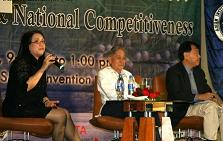
Battling the forces of recession and pushing Philippine competitiveness require tapping responsibly our seas, lands and forests in providing jobs, strengthening local government units (LGUs), and improving transparency in government, says Meneleo Carlos, Jr., President of RI Chemical Corporation, in his speech before the National Conference on the State of Philippine Competitiveness 2009 held at the SMX Convention Center, Pasay City on 13 July 2009.
Mr. Carlos delivered the private sector response to the survey on the state of Philippine competitiveness, which ranked the Philippines 43rd among the 57 countries across the globe. The Philippines was the least competitive country in Southeast Asia and the worst among Asian countries. She has remained in the bottom third for the last five years. The survey was conducted by the Switzerland-based Institute for Management Development with support from the Asian Institute of Management (AIM).
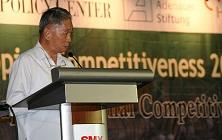
Unemployment remains a major problem, Mr. Carlos said, recommending tapping more the country’s’ natural resources such as our seas, lands and forest to provide jobs. He pointed out that such initiative would bring about not only economic benefits, but also peace and order in the land. “ We must actively engage the LGUs in this endeavor,” he said.
In his remarks, Mr. Carlos proposed other measures to improve the country’s competitiveness, namely:
– Implement a more effective infrastructure planning and maintenance program, and ensure that public interest takes precedence over private concerns.
– Develop more ports and water transportation such as the Ro-Ro to connect the whole archipelago.– Focus on preventive health care and get LGUs more involved.
– Improve the quality of science, math and language teaching by increasing the education budget and focusing on primary and secondary education.
– Promote R&D by converting universities into research institutions and pursing more linkages between business and academe.
– Improve government transparency by reviewing and implementing laws to prevent bad business practices, and reduce cost of doing business.
– Rationalize fiscal incentives by review tax holidays granted to some firms
– Stop technical smuggling that will earn government more revenue in the amount of 100 billion pesos.
On the environment, Mr. Carlos proposed a closer look at the nuclear power option as a way to address problems on energy supply, conservation and efficiency.
The country’s overall competitive performance went down three notches from last year, from a ranking 40 to 43, overtaken by Indonesia with a ranking from 51 in 2008 to 42 in 2009. The top ten countries in competitiveness were USA, Hong Kong, Singapore, Switzerland, Denmark, Sweden, Australia, Canada, Finland and the Netherlands.
The major movers in the competitiveness performance were Indonesia, Greece, Columbia, Estonia and Taiwan.
The survey examined the critical indicators for competitiveness to include economic performance, government efficiency, business efficiency and infrastructure.
In economic performance, the Philippines ranked 51 among 57 countries surveyed. In government efficiency we placed 42. In business efficiency, we fared better with a 32 ranking while in infrastructure, the country dropped from 48 in 2008 to 56 in 2009.
Among the relative strengths of the Philippines were in the areas of prices, fiscal policies, societal framework, and labor market. Its relative weakness covered international investments, public finances, basic scientific infrastructure, business legislation, productivity and efficiency, and education.
In its presentation, officials of the AIM Policy Center, concluded that among the many challenges of the Philippines in 2009 were to:
– strengthen domestic markets to moderate the impact of an export slowdown.
– Implement a cohesive policy agenda to address job-skills mismatch.
– Address energy shortfall, emphasizing integrated strategic planning and good governance practices.
– Better align national regulatory policy with local reform initiatives to improve local business environment
– And alleviate hunger and poverty by improving long-term competitiveness of human resources.
In her remarks, Professor Ma. Lourdes Sereno, Executive Director of the AIM Policy Center, said that the survey was not meant to be an outlet for government bashing; it should serve as an urgent call for all stakeholders to get their act together to address the challenges confronting national competitiveness.